Top 10 Film Stocks According to 293 Photographers
A 2025 Film Log Report
11 min read by Dmitri.Published on .
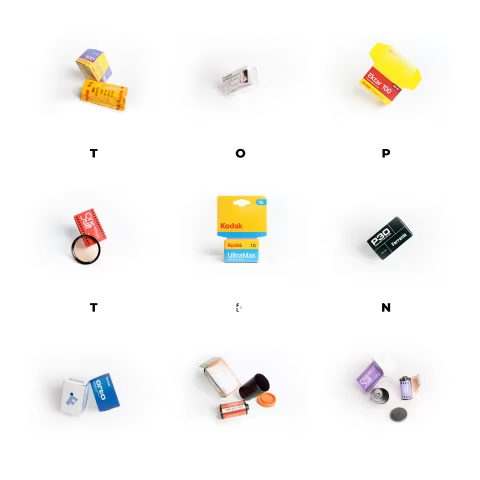
Film Log is a web app for tracking film usage across cameras. So far, it logged 850+ rolls of film for 293 photographers.
This weekend, I combed through the anonymized entries to reveal the top 10 most popular films amongst photographers from 40+ countries and nearly 600 brands logged since 2022.
In this article: Why? How? Film #10: A newcomer? Film #9: A skewed result? Film #8: An affordable colour-negative film. Film #7: An affordable colour-negative film in ISO 400. Film #6: “World’s finest grain.”” Film #5: An iconic black-and-white film. Film #4: *The* ISO 125 black-and-white film to shoot. Film #3: It’s more than just a respool. Film #2: Adored by the community. Film #1: The oldest formula in production gets the trophy. Exclusions. Support this blog & get premium features with GOLD memberships!
Why?
“What are the most popular photographic films sold and used today?” — seems like a basic question that should be easy to answer; however, it is not.
The top search results on Google point to sources that range from none to scams.
Tools like ChatGPT may generate an answer that represents the popularity of particular film names in its training set, something random, or results from the web that point to opinion listicles. The most reliable source is a KEH report from 2022; however, they warn that their list is influenced by stock availability at their location.
One film shop, even a popular one like KEH, won’t represent the entire market. Distributors and large manufacturers may have a better picture, but those numbers are neither definitive nor even available.
I think that I can answer this simple question better than any source on the internet.

How?
Film Log saves and syncs log entries across devices and browsers using a private database. I created a script that analyzes all entries in a specific data collection and extracts just the film names.
The film names are written by hand and often include additional information about pushing/pulling, various namings (like: “Ilford HP5+ 400,” “HP5,” “ilford hp5,” “hp 400”, and many others). So I wrote another script that fuzzily matches the film names based on unique properties like ISO speed numbers and common synonyms.
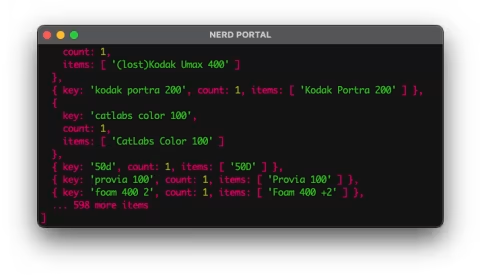
After all that, I ended up with 698 groups made from 856 film names. Admittedly, several spelling variations remained unmatched, and there’s also the question of whether rebranded films should be grouped by stock. Thankfully, the largest groups had over 20 members, accounting for more than 2% of all the films on this list.
While 856 films reported by 293 isn’t as large a sample as something that a popular shop like KEH could source, it is better distributed in terms of which films are part of the list (Film Log users come from over 40 countries and shoot films from a diverse set of shops, including expired stocks purchased locally or over eBay).
Once the film names were grouped, I arranged the groups so the largest ones appear at the top — those would be the most popular stocks. The accuracy of these rankings varies from position to position. The lowest-ranking films are easily skewed, but the top-ranking films are most likely representative of the real world.
✪ Note: Film Log is typically used for roll film; therefore, this list omits instant film stats.
Film #10: A newcomer?
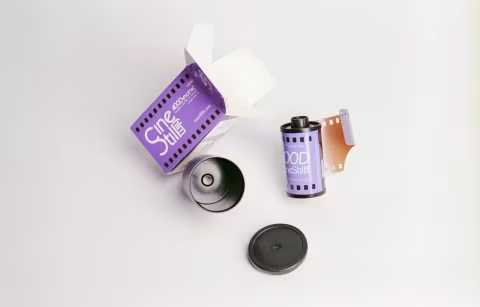
The script counted 3 entries naming CineStill 400D — although there are likely 3-5 more entries under highly unusual spellings (as is the case for all the films in this list).
400D is the only film in this series that was introduced less than 10 years ago. Despite the mixed reviews within the community, I found that this film is an excellent daylight option for medium-high ISO that’s often cheaper than Kodak Portra 400, yet it offers finer grain and a wider dynamic range than Kodak UltraMax.
This film is not a direct re-spool or rebrand of Kodak Vision 3 250D film, although there are some visual similarities between the two. In addition to the missing remjet layer, CineStill 400D uses components not found in the 250D, which increase its sensitivity, prevent static discharge, and make negative inversions easier when developed in C-41.
CineStill 400D is also available in large format; last time I checked, it was the cheapest colour option in 4x5!
Film #9: A skewed result?
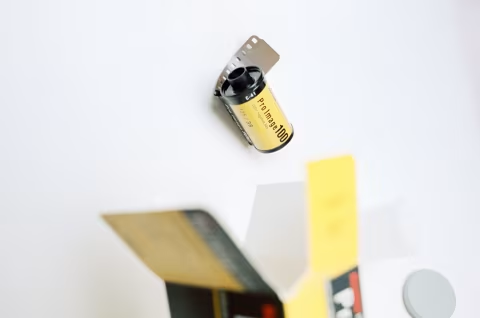
Kodak Pro Image 100 (5 entries). I almost certainly contributed to more than half of these records. Take that as you will.
Pro Image is one of the easiest films to scan (provided you don’t let your film inversion app mess with your colours). It’s relatively affordable and produces vibrant colours that are close to what you’d expect from Kodak Portra 400. A great option for making pastel-themed images on film.
Film #8: An affordable colour-negative film.
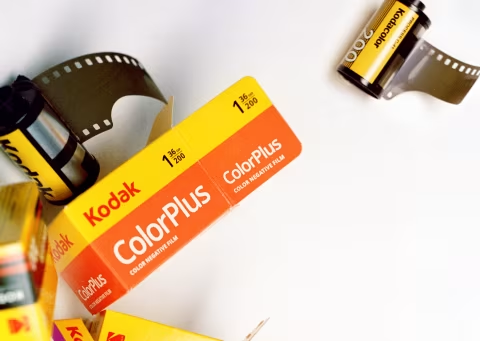
Kodak ColorPlus (7 entries). I’m not at all surprised to see this film in the top ten. Actually, I expected it to do even better, given how it’s often the cheapest colour-negative film. Not only that, but it’s also finer-grained and more colour-accurate than the newest Harman Phoenix I & II, ORWO NC 200, and maybe Lucky C200.
Despite costing less than all but some expired, or bulk-loaded cine films, properly-inverted and colour-corrected ColorPlus renders colours almost identically to Gold — a film you’ll find much closer to #1!
Fun fact: the new Kodacolor 200 is ColorPlus in a new packaging.
Film #7: An affordable colour-negative film in ISO 400.
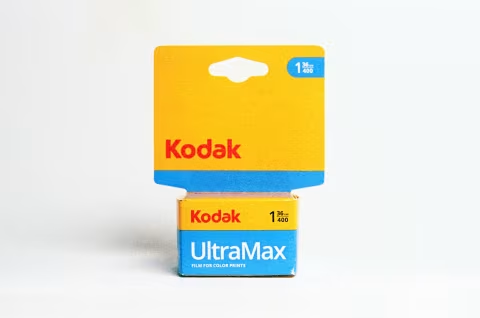
Kodak UltraMax (9 entries). UltraMax is Kodak’s cheapest ISO 400 colour-negative film.
Like ColorPlus, UltraMax is relatively affordable; a version of this film is notably sold by Kodak’s old rival, Fujifilm (with boxes marked “Made in the USA”).
In my opinion, UltraMax/Fujifilm 400 US renders colours significantly more accurately than the new ORWO NC 500, Lomography Color’92, or any other recently-launched colour-negative film formula. Plus, it has finer grain.
