SMC Pentax-M 1:1.7 50mm Kit Lens Review
Premium Quality and Excellent Design for Under $50
8 min read by Dmitri.Published on .
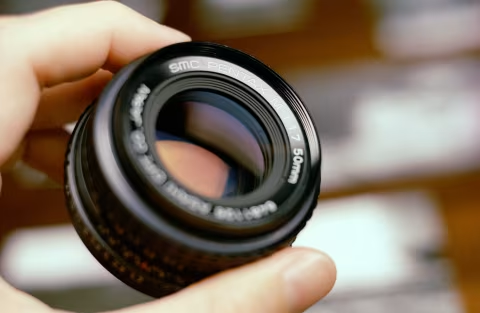
The SMC Asahi Pentax-M 1:1.7 50mm is a kit lens you may find on vintage SLRs, like the Pentax MX.
A standard lens with no “extra” qualities like a slim profile or macro capabilities, it is also the one that introduces and represents the entire mount ecosystem. And it does so brilliantly with premium quality and excellent design for under $50.
But don’t confuse this lens with the (newer) SMC Asahi Pentax-A 1:1.7 50mm — it’s very different, particularly in terms of build quality.
In this review, I’ll discuss the significance of the Pentax-M 1:1.7, talk about its specs and image quality, compare it to the Pentax-A, and share lots of samples.
In this review: Specifications. Why this lens matters. Pentax-M vs. Pentax-A. Ergonomics & build quality. Image quality. Where to buy. Support this blog & get premium features with GOLD memberships!

Specifications.
The SMC Pentax-M 1:1.7 was in production for seven years between 1977 and 1984. Its 50mm focal length is considered “normal,” as in its angle of view is approximately equal to how we see the world. Its impressive close-focus distance and a standard filter thread, combined with powerful elements, make it an excellent choice for experimentation and daily shooting.
Focal length: 50mm.
Closest focus distance: 45cm/18” (great for close-ups).
Aperture size: 𝒇1.7-𝒇22 with half-stop clicks, 6 blades.
Angle of view: 47° diagonal on a full-frame/35mm film (32° on APS-C).
Filter thread: 49mm (a very common size).
Formula: 6 elements in 5 groups.
Weight: 184g (6½oz).
Dimensions: 63mm (2½”) diameter, 31mm (1¼”) length (from the mount, when set to infinity).
Why this lens matters.
The Pentax-M 1.7 is one of the most compact 50mm SLR lenses ever made, particularly of this quality: metal chassis with excellent finish. It’s easy to find, and it’s also affordable.
This lens marks a new age of film SLRs, when Pentax began releasing incredibly small bodies, a trend that lasted until the 1990s, when electronics and other features began to make their way into cameras.
Being a small, high-quality, affordable piece of glass, this lens has undoubtedly made a difference in how photographers thought of the brand then and now. It has certainly raised my respect for all Pentax cameras of the era and fueled my search for an even more compact solution that would make my SLR fully pocketable — but that’s another story.

Pentax-M vs. Pentax-A.
Unfortunately, the next iteration of this lens, SMC Pentax-A 1:1.7, was made with significantly lowered manufacturing and design standards. The “A” had image quality that’s comparable to the currently reviewed “M,” but it was a flimsy piece of equipment that fell apart easily.
The “A” used more plastic components, and upon disassembly, I found that it also used fewer parts, which inevitably led to a stuck aperture ring and other problems. The only redeeming quality of Pentax-A 1.7 is its automatic aperture coupling, but if you ask me, that isn’t worth the hassle of dealing with its brittle design.
Back to the good one, the Pentax-M 1.7:

Ergonomics & build quality.
SMC Pentax-M 1:1.7 is a well-built lens. It feels solid; it holds that heft of a metal chassis, and it can work like new nearly fifty years after its production date.
Its compact size certainly helps, though reliability and build quality are my favourite attributes. The Pentax-M feels as good or better than the 50mm Nikon lenses of its age (and I’m not talking about the plasticky Series E).

The Pentax-M’s aperture clicks are fairly stiff. On my copy, it’s not due to the age; rather, it’s the hardness of the spring and the depth of the grooves that create the clicks — a manufacturer’s choice.
If your Pentax camera has a small window right above the lens — as the Pentax MX pictured above — you’ll see the aperture number in the viewfinder. This way you can change your camera settings without lifting your eye from the finder (although that doesn’t always work well in dim light).
The middle ring has a depth-of-field calculator: it shows which distances will stay in focus with a given aperture. For example, if your aperture is set to f8 and the focus is at ♾️, everything further than 25’ (7.6m) will be in focus — I could tell this by the blue 25-feet focus mark matching with the f8 on the middle ring.
☝︎ Further reading: “Hyperfocal focusing.”
The focus throw (or how far the lens rotates between its minimum and maximum focus settings) is about 225° on this lens, but only 90° between the 1m/3’ and the ♾️ mark, which is a common shooting range. In other words, the lens is quick to focus while also precise at shorter distances.
The white plastic bump on the side is a hint for mounting the lens in the dark or without looking. If you feel for this bump and then match it with the lens release knob, the lens will slide into its mount, and you can twist it into the locked position. I’ve never needed this feature, but it’s pretty neat.

Image quality.
You may’ve noticed that most of the samples in this article are close-ups with lots of bokeh in the frame. Admittedly, I couldn’t stop myself, given this lens’ impressive close-up distance of 45cm and neutral, modern-looking bokeh that works with the scene, adding depth while steering free of distracting distortions.
While some reviewers noted softness at wider apertures, it’s not important to images like these. The lens can be plenty sharp, corner-to-corner at its optimal settings. Besides, if resolution is what you’re after, there’s a lot more than the lens choice that makes a big difference in that department.
One last quality I’d like to point out in the wide-aperture close-ups: a nearly complete lack of vignetting.

The photo below was taken with the aperture set to somewhere around f5.6. The film (Kentmere Pan 200, which I previously sold under my Cinema Shorts film brand) was developed in Rodinal (1+25 for 8min), which can be a fairly contrasty combo. I think the lens worked well with that recipe, supporting the photochemical contrast with its own medium-high contrast, thanks to the advanced “Super-Multi-Coated” (abbreviated as SMC) treatment.

The next image was made in arguably ideal conditions. Front-lit, high-key ratio, lens stopped down to around f8.
The ideal focus distance is around the nearest white square-ish gutter drainage pipe, where the resolution is limited by the film grain, and not the lens.

One more for the road:

I like this lens. It’s well-made, it has excellent optical qualities, and it’s fun to hold in hand. It’s one of the nicest kit SLR 50mm lenses I’ve used.
Where to buy.
You can still find this lens for less than $50 in 2026, though the prices range from $30-$150 across sellers and vary by condition. A higher price doesn’t necessarily mean better quality or service — see this guide on making the best of online marketplaces like eBay.
As always, ask your seller questions about the condition of the lens, check for fungus, stuck aperture or focus rings, and be aware of the return policies.
Below are some places that sell these lenses today:
❤ Please consider making your SMC Asahi Pentax-M 1:1.7 50mm lens purchase using this link so that this website may get a small percentage of that sale — at no extra charge for you — thanks!