Ride a Dragon
Instant Photography Series
3 min read by Canyon.Published on .
In “Ride a Dragon,” I turn to the immediate, tactile language of instant photography to explore the body as a vessel of memory and a landscape shaped by time.
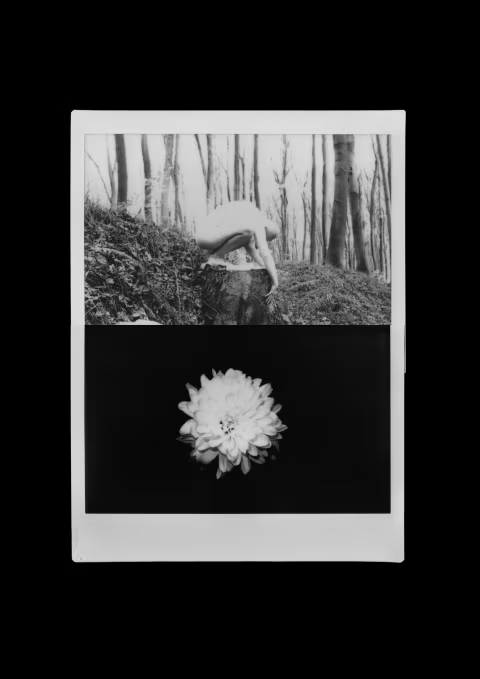
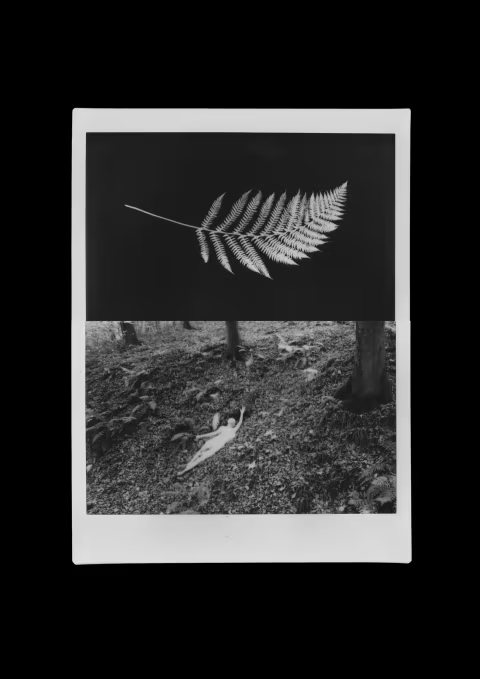
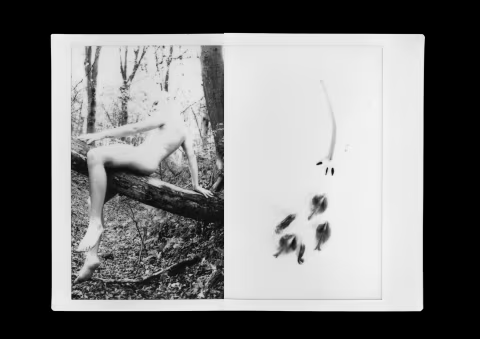
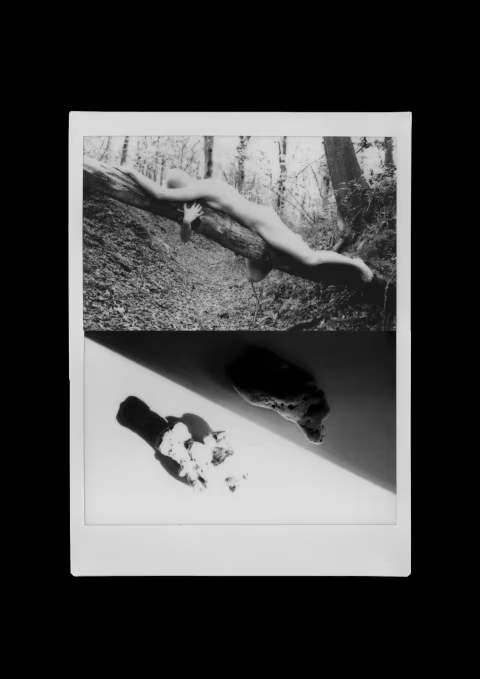
Working with Instax Wide black-and-white film, I constructed diptychs in which fragmented human forms appear alongside natural artifacts as leaves, shells, petals, and flowers. These pairings read like traces, excavations, or quiet residues of something once present yet now slipping into disappearance.
The series extends my ongoing interest in the boundary between presence and loss: what remains in the air after a gesture, what inhabits a space after a body departs, how memory settles into physical matter. Through printed scanning and re-materialization, each photograph undergoes a process of touch, printing, and re-reproduction. In this tactile cycle, the image gathers marks and imperfections — visual echoes of lived experience. Like places that remember more than they can articulate, the photographs accumulate their own history.
I was listening to songs by Maria McKee and Okay Kaya while making these photographs. Their music became a quiet scaffolding for the images and a rhythm I could inhabit while working. Shooting this series was a form of therapy for me, a way of translating sound into atmosphere, emotion into gesture. I imagine how the songs I love would look if they could take shape in the world: how a melody might become a curve of the body, how a lyric might echo in the shadow of a leaf, how a voice might resonate through the stillness of the forest. In that sense, the images are not only visual works but also emotional transcriptions, attempts to materialize the inner landscapes their music opens within me.
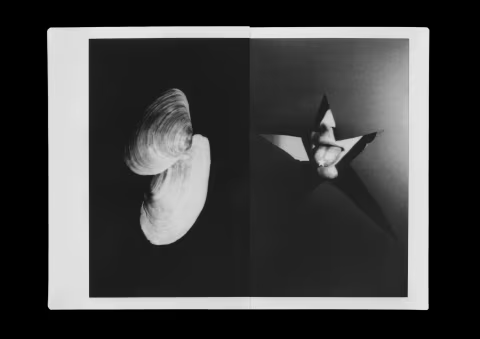
Set within a forest, the images unfold in a landscape that is both literal and emotional. The bent branches, fallen leaves, and soft organic forms mirror the human body’s vulnerability. The forest becomes an archive of inner states, holding the tension between fragility and endurance. Figures stretch across tree trunks or dissolve into the shadows of the understory, their presence both undeniable and ephemeral.
The series suggests that histories, personal, bodily, and ecological moments always linger. They leave marks — subtle yet persistent, resurfacing through juxtapositions of body and nature.