Kodak High-Speed Infrared Film User Guide & Review
It’s Grainy, It’s Expired, and It’s EXTREMELY SENSITIVE ⚠️
10 min read by Dmitri.Published on .
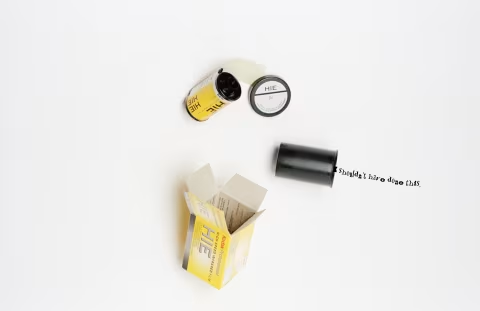
Kodak High-Speed Infrared Film (HIE) is a discontinued & expired film known for its extreme infrared sensitivity — up to 900nm!
This unique property can render the starkest Wood effect on film, painting grass, leaves, and flowers uncharacteristically white.
A highly-regarded discontinued film, Kodak HIE is still relatively affordable. A single 35mm roll is selling for $30-50 in 2026, which is fairly high yet not nearly as much as the remaining supplies of Aerochrome or even non-infrared films like Fujicolor Natura 1600.
A specialist, expired ultra-sensitive infrared film, Kodak HIE, requires more consideration and preparation than other films, including IR. In this guide and review, I’ll cover the precautions, tools needed, metering, and whether this film is worth the money for your next project.
I’ll also discuss whether the Kodak HIE’s extended 900nm sensitivity is worth the hassle or if it’s better to just shoot something like the freshly made Rollei Infrared’s 750nm, which is a safer and easier choice of film.
In this review: Warning ⚠️. Is Kodak HIE film worth it? Filter and exposure. Developing Kodak HIE with Rodinal. Trichromes with Kodak HIE. Where to buy. Support this blog & get premium features with GOLD memberships!

Warning ⚠️.
I ignored a warning on the package, and it cost me many precious frames of this relatively expensive film. My second roll was dead on arrival (only the last few frames yielded any images), but that was out of my control. What I really shouldn’t have done is (DO NOT!) take the roll out of its plastic canister in daylight.
In my defence, the warnings lacked emphasis.
Most films are OK being loaded in bright light. Many film boxes warn to be handled in shade, yet none have given me problems when I disobeyed (I tried close to 100 brands). Kodak HIE is different: a few minutes under studio lights fogged the first 12 out of 36 frames.
The reason this film is so sensitive to light is the complete lack of the anti-halation layer. Without it, light instantly exposes the leader and then travels through the film itself and inside the cartridge. As the light enters the cartridge, it reflects and refracts, exposing areas closest to the slit first. An anti-halation layer blocks these reflections, making most films safe to handle in bright daylight — but not Kodak HIE!
For this review, I’ve tested two rolls of this film, which cost me around $100 with shipping and taxes. My second roll, which I was very careful to load in a changing bag, was nearly completely unusable. This is to say that there’s a good chance that your film may be dead by the time you receive it in the mail.
And so the question then,

Is Kodak HIE film worth it?
The answer will, of course, depend on you. This film is expensive and a bit of a lottery, but working with it can feel quite special.
I’m frankly dissatisfied with my results, as they are quite grainy, which is not what I was hoping for, although it’s fair to expect that from a film this old and this sensitive. This film is available in 35mm and 4x5, so a larger format would solve that issue plenty — or you’ll have a few more tries to find the best shot with bulk 135 (unless the entire 100’ is fogged).
The extreme sensitivity of this film allows it to “light up” leaves that may not look as bright on a modern infrared emulsion. It also requires a specific filter, which is too dense for modern films, yet with the HIE it removes all visible light, leaving just the 700-900nm window that’s completely immersed in the invisible.
If you’re looking for something unique, like a deeper glimpse into the world that can’t be seen and are prepared to deal with occasional burnt film, Kodak HIE may be worth a try. I discuss several methods for getting a better deal on vintage cameras, many of which apply to expired film in this guide.
Even at $50/roll, Kodak HIE is still six times cheaper than Kodak Aerochrome.

Filter and exposure.
Visible light competes with infrared for exposure. Cutting visible light increases the proportion of infrared light that reaches the film. Whereas modern infrared film requires a mix of both, Kodak HIE works with Wratten 87, which is completely opaque to all visible light.

Wratten 87 and even its equivalents can be tough to find in forms other than gels (flexible plastic sheets). If you have a gel filter holder, this will work. However, I opted for a hacky solution, which involved a calliper and a circle-cutting tool (the particular cutting tool I chose didn’t make a hole in the middle, which is important for this job).
The idea is to make a perfect circle that would fit inside my transparent UV filter. It had to be very precise, as even the small 2” gel film squares cost $40-70. So I used my cutting tool to practice with pieces of paper first by measuring the space inside the filter ring with the calliper, transferring that value to the cutting tool, and carefully cutting paper circles until I could be confident in their fit. The inserts are to sit between the lens and the filter glass.

Kodak does not list ISO/film speed for its HIE emulsion and has no specific exposure recommendations. According to their datasheet, infrared light can behave differently from visible light, which means that light meters can not be very helpful for exposures.
Nevertheless, Kodak suggests rating it as an EI (ISO) 25 film with the Wratten 87 filter as a starting point.
Interestingly, Wratten 87, which is completely opaque to visible light, only slightly cuts the film’s sensitivity, as the box mentions EI 80 for the no-filter option.
All that said, shooting this film implies a lot of guesswork, even with official documentation, which didn’t feel particularly encouraging, given how much this stuff costs.

Nevertheless, I went ahead and tried to shoot using the suggested settings, trying to catch the sun’s rays reflecting directly from the foliage into the lens.
The results I got from Kodak HIE with Wratten 87, exposed at EI 25, developed in Rodinal (more on that later) were encouraging. Not so much that I was thrilled by what I saw once I scanned the film, but I could see that the density appeared satisfactory, meaning that the negatives neither looked too thin nor too dense and the scans could render both shadows and highlights without significant loss of detail. Although I could tell that there was also some fogging.

Developing Kodak HIE with Rodinal.
Rodinal may not have been the best choice for this film, as this developer is known to produce high contrast and chunkier grain. Kodak HIE film is advertised as “moderately fine-grained” on the datasheet, but all the samples I’ve seen looked quite coarse.
Still, even the best developer match would only eat at the edges of the grain clumps, making it appear finer but not necessarily improve legibility. Besides, that’s all I had, and the end results appear to match others’ samples of this film I’ve researched online.
To improve my chances of getting a good image, I’ve researched and modified the recipe by increasing the time, decreasing the temperature and reducing the agitation:
Kodak HIE Rodinal recipe: 1+50 for 14 min at 17℃ (62℉), agitated every 2 minutes.

Trichromes with Kodak HIE.
I’ve shot two rolls of Kodak HIE. My mistake with the first roll was exposing it to the light before loading it into a camera. That added light leaks to about 12 frames of 36. I was a lot more careful with my second roll: I opened it and loaded it into the camera in a changing bag (it wasn’t very difficult). Alas, the second roll was almost entirely damaged due to poor storage or other issues and only the last four frames — the ones closest to the core of the roll — had any scannable images.
With my second roll, I used the final few frames to try a trichrome to simulate the effect you’d get from Aerochrome, but by combining a few frames shot through various filters on infrared black-and-white film. I’ve used the blue, orange, and green filters I had available for my camera and tried two different techniques for combining the layers:

The colour swaps on the left, which use the infrared channel to create red colours, orange to create the greens, and greens to create the blues, are the same as those within the actual Aerochrome emulsion. On the right, I used a more common method of using complementary colours where the frames shot through the green filter produce green colours, etc.

The test’s limited, flawed frames produced very similar results, with the complementary colour pairs looking a little better — though it’s hard to say for sure (and this may be different with modern IR black-and-white films).
A note on how the colours were blended: I used Photoshop, and selected the channel (either Red, Green, or Blue) in the Blending Options after double-clicking the layer.
I’ve also played with the Color Balance settings and added a bit of contrast, as the original scans were pretty flat and combined layers needed a nudge to look a little more like Aerochrome.
Where to buy.
Kodak HIE film rolls aren’t particularly rare. There’s usually at least a couple on sale on eBay at any given point. You may like to watch that category (more about eBay shopping here).
❤ Please consider making your Kodak HIE High Speed Infrared film purchase using this link so that this website may get a small percentage of that sale — at no extra charge for you — thanks!